
 Business License
Charcoal Drying Machine: Continuous Mesh Belt Solution
If your barbecue charcoal briquettes leave the press at 25–35% moisture, every hour they sit waiting for the sun is an hour of lost capacity, cracked product, and revenue that never reaches the container. The core problem is not briquetting—it is drying. A charcoal drying machine built around a continuous mesh belt turns that bottleneck into a controlled, weather-independent stage of production. This guide explains why the shift from batch or open-air drying to an industrial briquettes drying machine is now a competitive necessity, and how to specify a system that matches your output.
Why the BBQ Charcoal Boom Makes Drying the Deciding Stage
The global BBQ charcoal market grew from $3.5 billion in 2025 to an estimated $3.81 billion in 2026, a 9% compound annual growth rate, according to BBQ Charcoal Market Report 2026 by The Business Research Company. That demand is driven by outdoor grilling culture, foodservice expansion, and a consumer shift toward consistent, low-smoke briquettes.
For producers, that growth exposes a structural weakness. In a study published through Maejo University’s Journal of Renewable Energy and Smart Grid Technology, researchers note that drying is “the final, most time-consuming stage” of charcoal briquette production, significantly influencing the overall production cycle. Wet briquettes post-formation typically carry 25–30% moisture; without controlled drying, they crack, smoke excessively on ignition, and fail export specifications.
The quality bar is also rising. European standard EN 1860-2 sets a maximum moisture content of 8% for barbecue charcoal, while premium Brazilian specifications target below 5%. A producer relying on open-air drying in a humid climate cannot reliably hit those numbers at scale.
How a Continuous Mesh Belt Dryer Changes the Production Equation
A high capacity automatic conveyor belt drying machine replaces the variability of sun and manual turning with a multi-layer, forced-air process. Wet briquettes are spread onto a stainless-steel mesh belt and carried through insulated drying zones; hot air is pushed vertically through the bed so every briquette contacts the heat source uniformly.
The operational differences from batch or solar drying are measurable:
Uniform moisture, not average moisture. Batch systems often produce a mix of under-dried and over-dried briquettes; the mesh belt’s continuous turnover and vertical airflow deliver consistent drying across the load.
Energy consumption is front-loaded into design. A well-insulated chamber with recirculated hot air reduces heat loss; one supplier benchmark for drying one ton of briquettes from ~35% to 5% moisture is approximately 150–200 kg of wood or 100–150 kg of coal as furnace fuel. Heat-exchange efficiency in optimized continuous systems can exceed 95%.
Speed and temperature are adjustable, not fixed. Belt speed and airflow can be tuned from the control panel, allowing the same charcoal drying machine to handle different briquette densities and incoming moisture levels.
The drying stage no longer stops the factory. Continuous operation removes the “load–wait–unload” cycle of batch rooms, so upstream briquetting and downstream packaging run at a matched pace.
For an industrial briquettes drying machine, the practical result is throughput you can schedule. A producer can commit to a shipping date months ahead without building in weather contingency.
Step-by-Step: How to Reduce Moisture Content in Charcoal Briquettes with a Continuous Dryer
The long-tail question most buyers actually search is not “what is a dryer” but “how do I get moisture down to spec without cracking product.” The process below reflects the parameters used in controlled charcoal-briquette drying studies and supplier operating guidance.
Establish the incoming moisture baseline. Post-forming moisture typically sits between 25% and 35%. A higher starting point requires either reduced belt speed or a longer drying zone—both are configuration decisions, not operational emergencies.
Set the drying temperature band. Experimental work on accelerated charcoal-briquette drying identified 150°C as the point of highest efficiency and lowest fuel-consumption rate among tested conditions. Supplier guidance for BBQ briquettes often places the practical range at 180–200°C, with residence time adjusted to incoming moisture. The right setpoint for your product depends on binder type and briquette density; the key is that the mesh-belt system allows a controlled ramp rather than a single fixed temperature.
Match belt speed to target moisture, not to a stopwatch. If wet briquettes at ~30–35% moisture require roughly four hours of residence time in a given dryer configuration, belt speed is calculated backward from that residence time and the belt length. Speeding up the belt to “catch up” on output is the most common cause of cracked cores.
Use the multi-layer turnover to equalize exposure. As briquettes transfer from one belt layer to the next, they are gently repositioned, preventing the flat-face moisture trap that occurs in single-pass tray drying.
Verify final moisture against the destination market. For EN 1860-compliant markets, target ≤8%; for premium or tropical-transport specifications, aim lower—one Sierra Leone producer required under 5% to prevent reabsorption during shipping and storage.
Real Results: From Rain-Dependent to 24/7 Production
A charcoal briquette manufacturer in Sierra Leone operated in a region with abundant biomass but an intense rainy season that made open-air drying unreliable. Production was limited by humidity; briquettes arrived at customers with inconsistent moisture, causing ignition problems and excess smoke. The operation needed stable heat, sub-5% final moisture, and enough durability for transport.
After installing a controlled hot-air drying system, the producer reported:
Production time reduced from several days to a few hours.
Continuous 24/7 operation regardless of rainfall.
Consistent, crack-free briquettes with moisture under 5%.
The shift did not simply speed up one step; it removed a weather-linked cap on total plant output. The same principle applies to any barbecue charcoal operation where drying capacity currently trails briquetting capacity.
FAQ
What is the typical minimum order quantity and lead time for a charcoal mesh belt dryer?
Suppliers commonly set a minimum order quantity of one set. Lead times vary by configuration and season: peak-season delivery is often within 15 workdays for standard models, while customized or high-capacity units can require one to three months.
Can the dryer be customized for different briquette shapes, binders, and fuel sources?
Yes. Design-based customization is standard for continuous mesh belt dryers. Heat sources can be configured for wood, coal, gas, diesel, electricity, or biomass, and belt speed, airflow, and temperature zones are adjusted to the product’s density and target moisture.
How does a continuous mesh belt dryer compare with a batch drying room in operating cost?
Continuous systems spread energy use across a steady throughput and reduce manual handling; batch rooms concentrate energy into discrete cycles with loading and unloading gaps. The exact cost per ton depends on local fuel prices and heat-source choice, but the design principle is consistent: insulated chambers, recirculated hot air, and adjustable airflow lower the energy required per kilogram of water evaporated.
The drying stage is where charcoal producers either protect margin or lose it to weather, rework, and missed shipments. If your current drying method sets the ceiling on output, the next step is to define your required kilograms per hour, your incoming and target moisture, and your available fuel—then specify a charcoal drying machine against those three numbers, not against a catalog price alone.
Recently Posted
-
Continuous Rotary Carbonization Furnace: A Buyer's Guide
November 19, 2026If your operation is still relying on intermittent drum kilns or batch retorts, the bottleneck is no longer just labor or fuel—it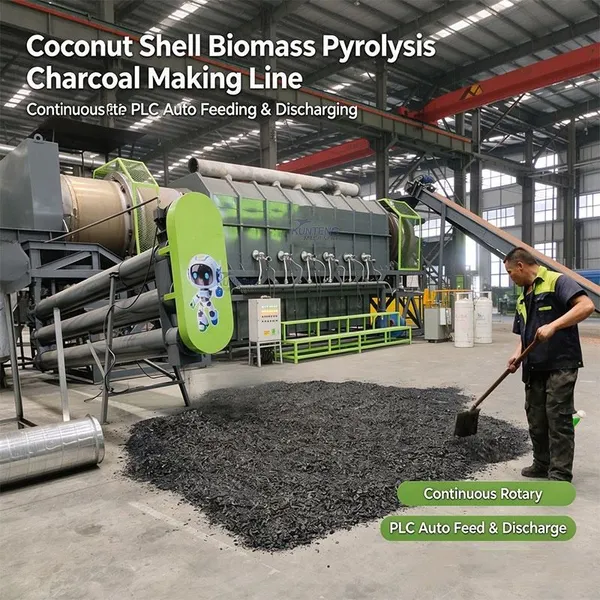 Read More
-
Large Capacity Charcoal Ball Briquette Machine: Cut Binder Cost
November 18, 2026Binder cost is the single line item most likely to decide whether a coal powder briquette making machine pays for itself. In coal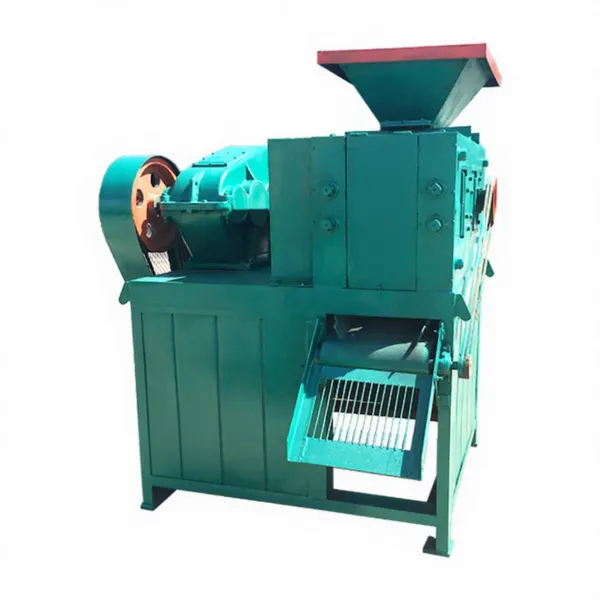 Read More
-
Extruding Biomass Briquettes: Rice Husk Profit Guide
November 16, 2026Published on 16 November 2026Rice husk is one of the most abundant and problematic agricultural residues in Asia-Pacific. It is lo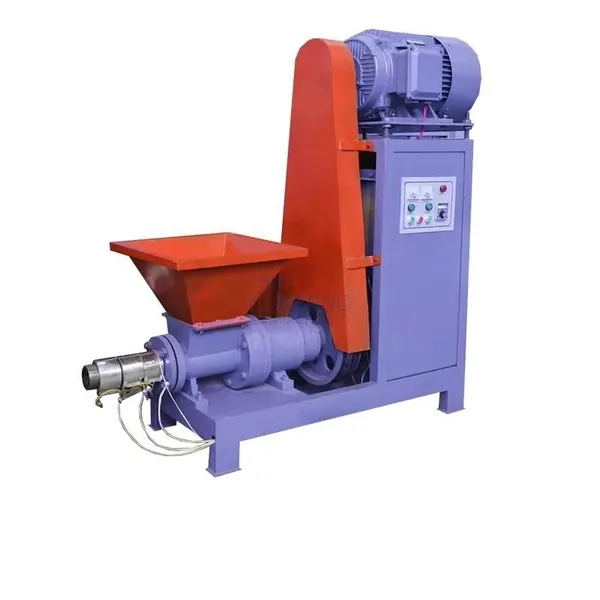 Read More
-
Animal Dung Pellet Maker: From Waste to Fuel
November 13, 2026Every poultry or dairy operation faces the same quiet arithmetic: the birds and cattle keep producing litter, and the disposal bil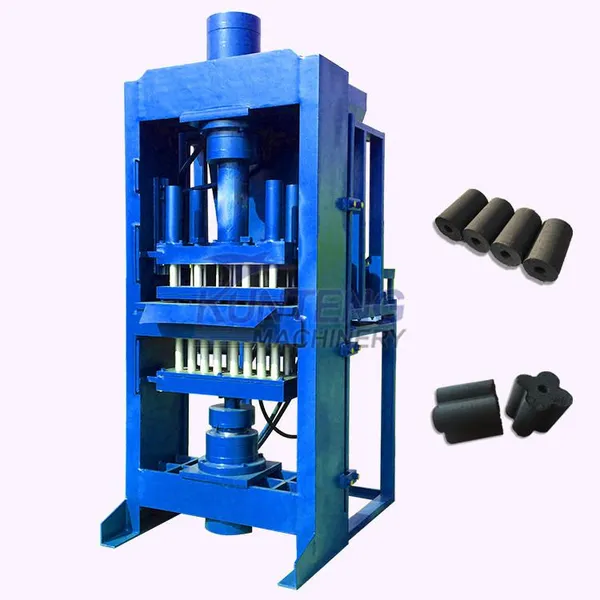 Read More

Contact Us
Recommended Products
-
 Continuous Heavy Metals Shredder Damaged Cars Crusher HMS Heavy Melting Steel Scrap Wire MS Iron ShredderNegotiableMOQ: 1 Set
-
Large Dustbin for Sorting Table With Scrapshoot Hole Waste Segregation Machine Sorting LineNegotiableMOQ: 1 Set
-
High Productivity Iron Ore Powder Ball Press Machine Mineral Soil Silicon Powder Briquetting MachineNegotiableMOQ: 1 Set
-
Eco-friendly Coconut Shell Charcoal Briquette Making Machine Charcoal Press Machine Bbq Charcoal Production LineNegotiableMOQ: 1 Set
-
Full Automatic Coconut Charcoal Hydraulic Press Machines Sawdust Charcoal Briquette Machines Biomass Charcoal Briquette MachineNegotiableMOQ: 1 Set
-
Corn Stalk Briquette Making Machine Chicken Manure Biomass Briquetting Extruder Press MachineNegotiableMOQ: 1 Set
-
Small Scale Charcoal Briquette Making Machine Compressed Coal Industry Machines Automatic Extruder Production LineNegotiableMOQ: 1 Set
-
Automatic Eco-Friendly Vertical Hosting Carbonization Furnace Horizontal Sawdust Carbonizer FurnaceNegotiableMOQ: 1 Set
-
Eco-friendly Charcoal Making Machine Carbonization Furnace Continous Carbonization StoveNegotiableMOQ: 1 Set
-
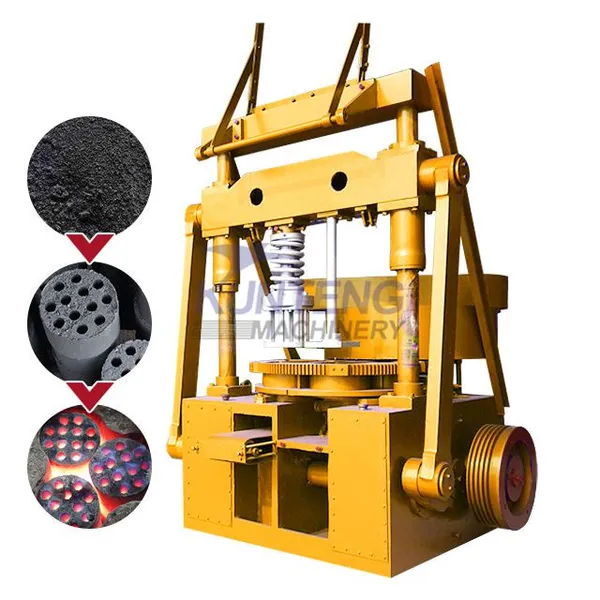
Coal Press Machine Can Customize Honeycomb Coal Forming Machine Commercial Forming MachineNegotiableMOQ: 1 Set
-
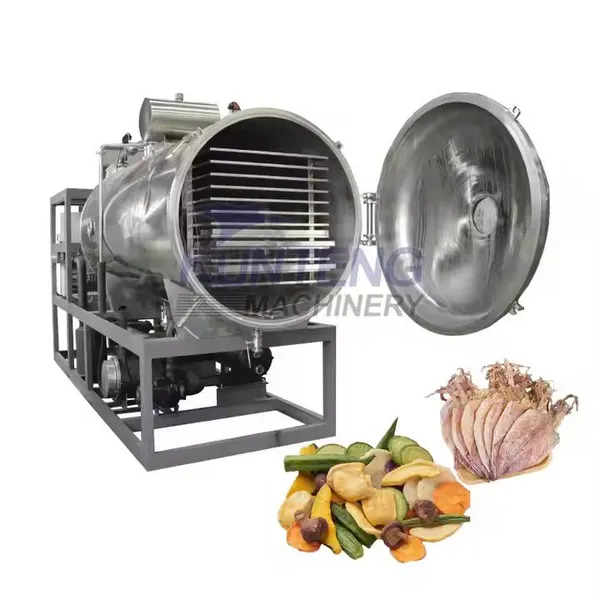
Large Commercial High Productivity Freeze Drier Dryer LyophilizerNegotiableMOQ: 1 Set
-
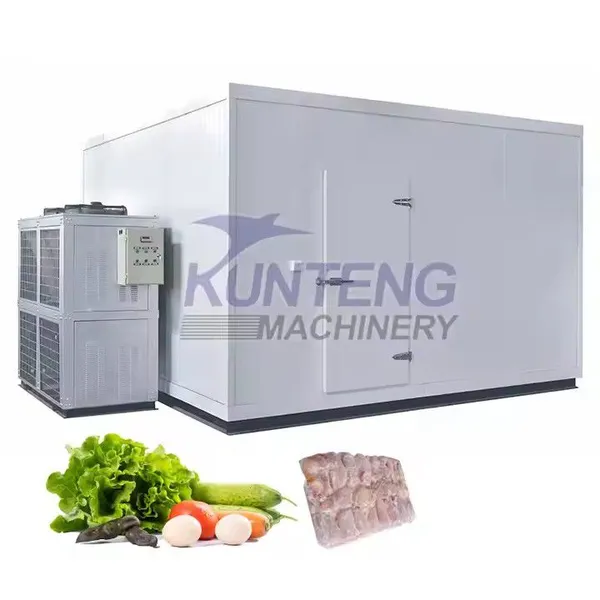
Monoblock Freezer Blower -18c Cold Storage Cold Room Kits CoolingNegotiableMOQ: 1 Set
-
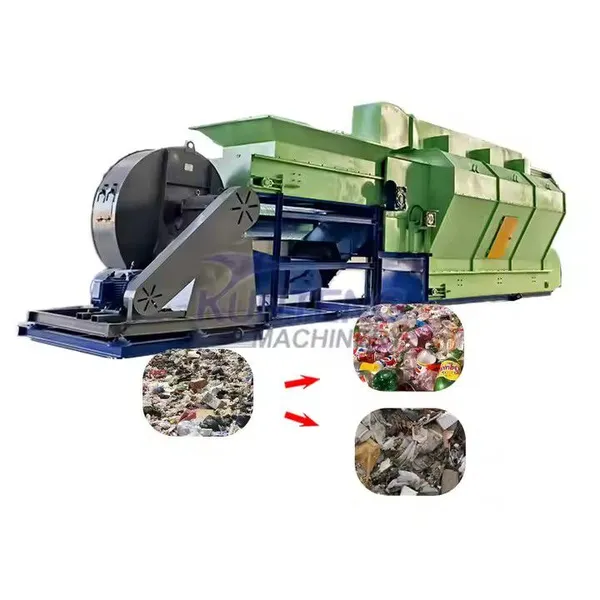
Professional Air Flow Separation Machines Air Separation System for Waste SortingNegotiableMOQ: 1 Set
-
Smokeless Waste Incineration Machine Garbage IncineratorNegotiableMOQ: 1 Set
-
Fruit and Vegetable Drying Processing Machine Grape Raisin Drying Machine Mango Dryer MachineNegotiableMOQ: 1 Set
-
Trommel Screen Machine Construction Waste Sorting EquipmemtsNegotiableMOQ: 1 Set
-
Municipal Solid Waste Converts to RDF Machines Waste Plastic to Fuel Machine Waste Recycling PlantNegotiableMOQ: 1 Set
-
High Capacity Teak Drying Chamber Timber Formwork Dry Machine Wood Drying EquipmentNegotiableMOQ: 1 Set
-
Smart Waste Plastic Crusher and Baler Machine Recycling Machine for Plastic Waste to Make BricksNegotiableMOQ: 1 Set
-
New Design Waste Separation Machine Trommel Screen Machine for Rubbish Garbage Sorting Plant LineNegotiableMOQ: 1 Set