
 Business License
Frozen French Fries Potato Production Line: A Buyer’s Yield Guide
Published on October 30, 2026
Most frozen French fries production line investments fail not at the frying stage, but at the sizing stage. A processor orders a line rated for a headline capacity, only to discover that peeling losses, front-end bottlenecks, and oil degradation quietly consume the margin the feasibility study promised. The result is a line that runs—but never at the yield or cost per ton the buyer modeled. This guide addresses that gap directly: how to match a frozen French fries potato production line to real operating conditions, where hidden losses accumulate, and what a well-integrated potato tater cleaning peeling slicing frying package processing line changes in practice.
A Growing Market That Is Also Getting Less Forgiving
The global French fries market was valued at USD 24.32 billion in 2025 and is projected to reach USD 33.10 billion by 2031, expanding at a CAGR of 5.41% (Mordor Intelligence, French Fries — Market Share Analysis, Industry Trends & Statistics, Growth Forecasts 2026–2031). Within the broader frozen potato category, Grand View Research pegs the 2025 market at USD 17.7 billion, with frozen potatoes holding over 40% of processed potato share.
Volume growth, however, does not translate evenly into processor profit. Two structural pressures are reshaping buyer expectations:
Quick-service restaurant concentration. Yum! Brands alone operated over 63,000 restaurants across 155+ countries as of fiscal 2024, with aggressive expansion in China, India, and other emerging markets. Processors with long-term QSR supply agreements gain volume stability but face exacting specifications on cut dimension, color consistency, and defect tolerance—specifications that expose any weakness in peeling, blanching, or oil management.
The raw-material waste penalty. FAO data indicate that approximately 376 million metric tonnes of potatoes were produced globally in 2021, and around 8,000 kilotons of potato peel waste may be generated by 2030, carrying roughly 5 million tonnes of CO₂-equivalent emissions (Khanal et al., Biomass Conversion and Biorefinery, 2024). For processors, peel waste is not only an environmental line item—it is lost saleable product.
The implication for equipment selection is direct: a potato chips production line or frozen fries line that cannot control peeling loss, oil turnover, and front-to-back capacity balance will compress margin even in a growing market.
Where a Well-Integrated Line Changes the Economics
A frozen French fries potato production line is often marketed by throughput (kg/h). Serious buyers should instead evaluate three loss-prevention subsystems that determine actual yield and operating cost.
Peeling method determines the first yield loss. Abrasive peeling can generate peeling waste of up to 60% of tuber weight when potato shape is irregular or eyes are deep, while steam peeling removes far less cortex. Product loss in steam peeling typically falls in the 8–15% range, compared with losses as high as 25% in abrasive systems under demanding conditions. At 1,000 kg/h input, the difference between 12% and 25% peeling loss is 130 kg of saleable raw material per hour—material that never reaches the fryer but has already absorbed procurement, transport, and storage cost.
Continuous oil filtration protects the second-largest cost center. In a potato chips production line, oil is both a consumable and a quality variable. Fines released during continuous frying degrade oil quality; a properly specified continuous filtration system removes these fines and extends oil life. Suppliers report that combined filtration and heat recovery can reduce operating cost by 20–30%, while maintaining fryer free fatty acid levels below 0.5% supports consistent crispness and fryer longevity.
Capacity balance prevents the bottleneck tax. A line rated at 1,000 kg/h is only a 1,000 kg/h line if washing, peeling, cutting, blanching, and frying operate at matched rates. When front-end processing speed does not match frying speed, the result is potato backlog, uneven fry color, unstable frying times, and workers idling between stages. A mature line uses continuous conveying, automatic elevators, and automatic temperature control to keep the entire sequence synchronized—because stability, not peak throughput, is what sustains long-run output.
How to Size a Frozen French Fries Line for Real Yield, Not Brochure Capacity
Use the following sequence to pressure-test any proposed frozen French fries potato production line before committing capital.
Start from stable raw-material supply, not target output. Confirm available potato volume, specification consistency, procurement channels, and storage capacity before fixing a nameplate capacity. Equipment that cannot run at full utilization because raw-material supply fluctuates will never deliver its rated ROI.
Match the peeling system to the potato and the product. For premium frozen fries where surface appearance and yield matter, steam peeling generally delivers lower product loss and cleaner surfaces than abrasive alternatives. Ask the supplier for peeling-loss data at your expected potato variety and defect level—not a generic percentage.
Specify the frying subsystem by control features, not just fryer length. A continuous frying system should include automatic temperature control, automatic filtration, oil circulation, and automatic oil replenishment. These features determine whether the line can hold oil absorption and color within specification across extended runs.
Confirm that the selected configuration supports the product mix. A dual-purpose line can switch between potato chips and standard fries by changing cutting blades and adjusting blanching time, saving space and capital versus two dedicated lines. If frozen fries are in scope, verify that the line is matched with a quick-freezing unit—this is not a generic add-on.
Reserve 20% capacity headroom. Sizing exactly to current orders often forces full-line replacement within two to three years after demand rises. A 20% buffer is a lower-cost decision than a second capital cycle.
Validate the after-sales and commissioning model. For a potato tater cleaning peeling slicing frying package processing line, installation, trial-run support, and operator training often determine whether the line reaches rated yield in the first month. Buyers should ask for a commissioning protocol and performance-verification checkpoints, not only a warranty duration.
What Integrated Sizing Delivers in Practice
Bem Brasil, Brazil’s leading potato processor, illustrates the value of matching line architecture to raw-material variability. The company produces roughly 500,000 metric tons of potato products annually and supplies more than half of all French fries consumed in Brazil. Its existing lines could not keep pace with demand, and incoming raw material varied several times per day. The installed Key Technology line was designed to run 30 metric tons of frozen potato strips per hour, incorporating optical sorters in both wet and frozen areas and an ADR EXOS defect removal system that trims blemished sections rather than rejecting whole strips—recovering good product and significantly increasing final yield.
At the startup scale, a Mexican food entrepreneur faced a different version of the same problem: no industrial-scale production experience and uncertainty about correct processing procedures. The finalized line included washing and peeling, stainless-steel conveying, uniform cutting, a continuous fryer with oil filtration, air cooling, drum seasoning, and de-oiling. After installation and a brief trial run, the line achieved stable production with controllable oil consumption and consistent seasoning—the buyer’s stated conditions for supplying local restaurants and distributors.
In both cases, the equipment did not simply add capacity. It converted raw-material variability and process uncertainty into predictable output.
Frequently Asked Questions
What is the minimum order quantity (MOQ) for a frozen French fries production line? Complete lines are typically quoted per set rather than per unit, with MOQ commonly stated as 1 set. Customization—layout, voltage, cutting specifications, and packaging interface—is usually available within the line quotation rather than as a separate MOQ threshold.
What is the typical lead time? For customized industrial lines, off-season lead time is commonly around one month, extending to one to three months during peak season, depending on capacity and configuration complexity.
Can one line produce both potato chips and frozen French fries? A dual-purpose line can switch between thin potato chips and standard fries by changing cutting blade molds and adjusting blanching time, provided the supplier confirms compatibility with a quick-freezing unit for the frozen product. Buyers should request a product-changeover procedure and validate it during commissioning.
The next step is not to compare more brochures, but to define your operating envelope: raw-material supply, target cut specification, expected oil turnover, and the product mix you intend to run over the next three years. A frozen French fries potato production line sized against those variables—rather than against a single throughput number—is the version that protects yield after installation. Request a line configuration review against your actual input data, and ask for peeling-loss and oil-filtration performance figures in writing before the quotation is finalized.
Recently Posted
-
Continuous Tray Freeze Dryer: Scale Without Nutrient Loss
October 28, 2026Published on 28 October 2026If your freeze-dried fruit, vegetable, or ready-meal line is still running batch chambers with manual Read More
-
Frozen Storage Cold Rooms: A B2B Energy Playbook
October 27, 2026Published on 27 October 2026A frozen storage cold room is no longer just a box that holds temperature. For B2B buyers evaluating a Read More
-
Horizontal Carbonization Furnace: Log & Bamboo Guide
October 26, 2026Published on 26 October 2026If you process logs, bamboo, or bulk woody biomass and still rely on traditional brick kilns or makesh Read More
-
How to Choose a Walk-in Cold Room That Cuts Downtime
October 23, 2026A Walk-in Cold Room is no longer a passive box at the back of a warehouse. For food distributors, processors, and cold-chain opera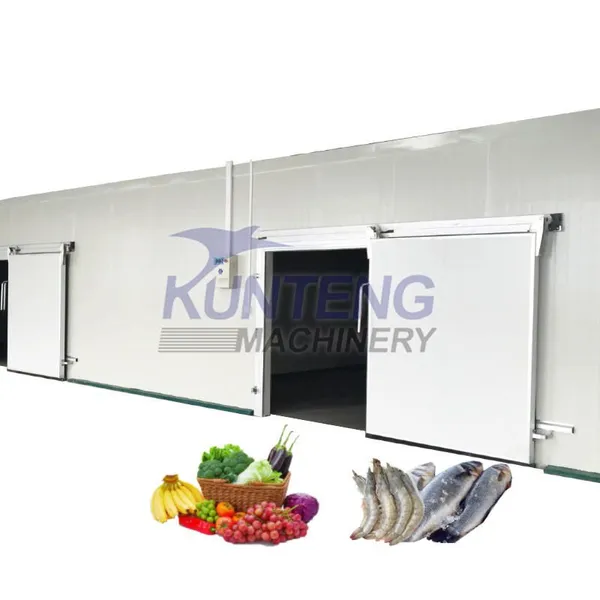 Read More

Contact Us
Recommended Products
-
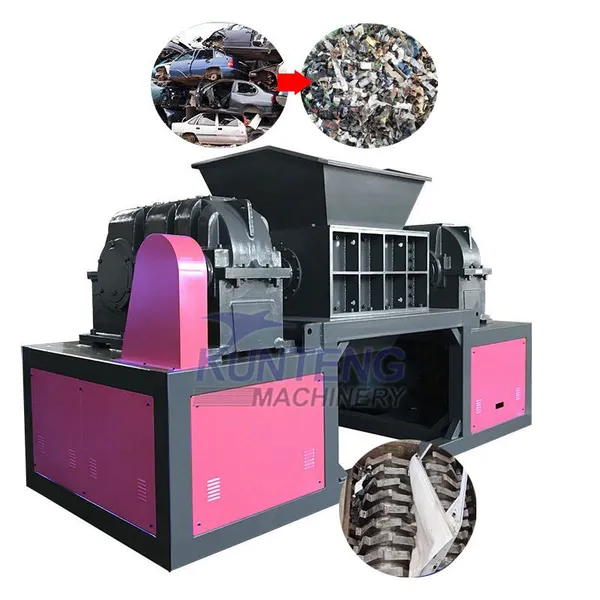
 Continuous Heavy Metals Shredder Damaged Cars Crusher HMS Heavy Melting Steel Scrap Wire MS Iron ShredderNegotiableMOQ: 1 Set
-
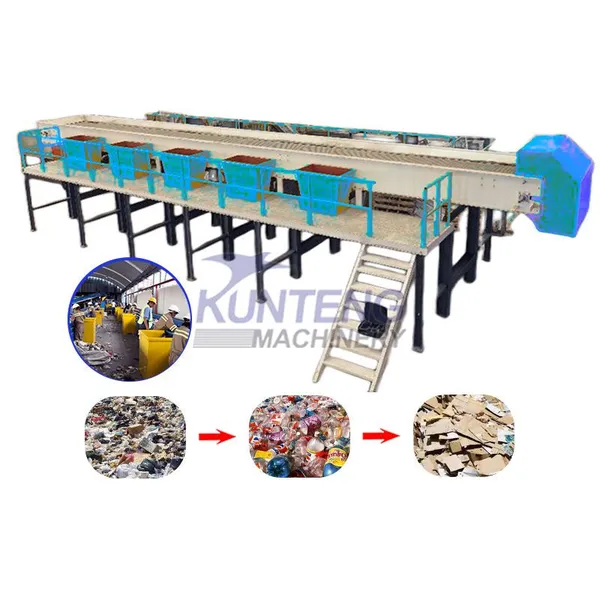
Large Dustbin for Sorting Table With Scrapshoot Hole Waste Segregation Machine Sorting LineNegotiableMOQ: 1 Set
-
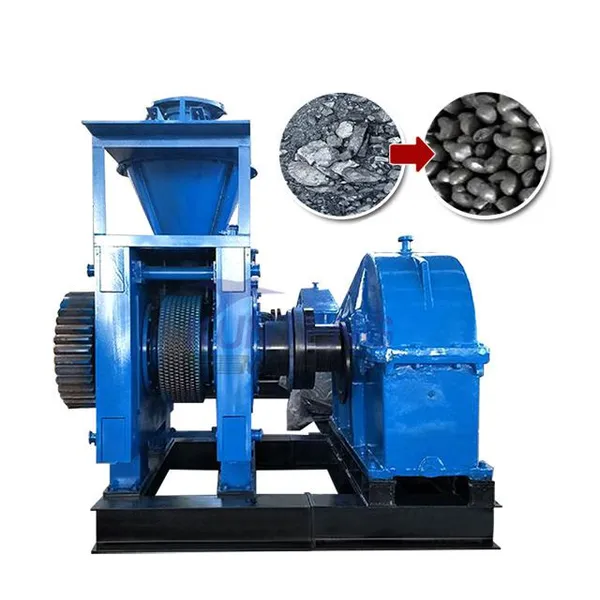
High Productivity Iron Ore Powder Ball Press Machine Mineral Soil Silicon Powder Briquetting MachineNegotiableMOQ: 1 Set
-
Eco-friendly Coconut Shell Charcoal Briquette Making Machine Charcoal Press Machine Bbq Charcoal Production LineNegotiableMOQ: 1 Set
-
Full Automatic Coconut Charcoal Hydraulic Press Machines Sawdust Charcoal Briquette Machines Biomass Charcoal Briquette MachineNegotiableMOQ: 1 Set
-
Corn Stalk Briquette Making Machine Chicken Manure Biomass Briquetting Extruder Press MachineNegotiableMOQ: 1 Set
-
Small Scale Charcoal Briquette Making Machine Compressed Coal Industry Machines Automatic Extruder Production LineNegotiableMOQ: 1 Set
-
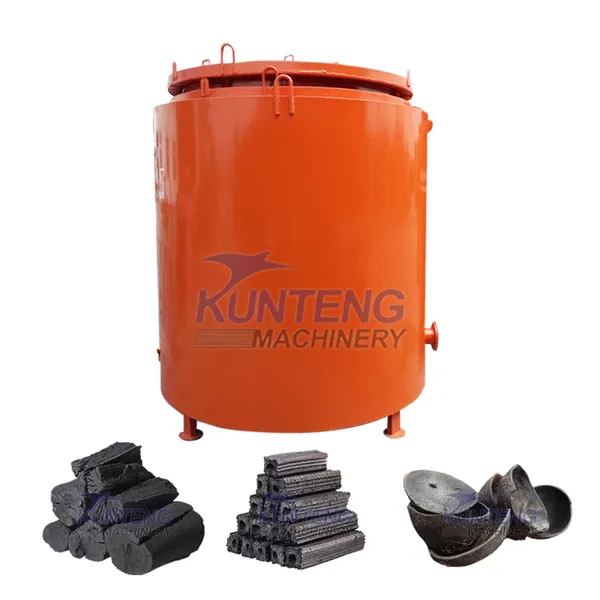
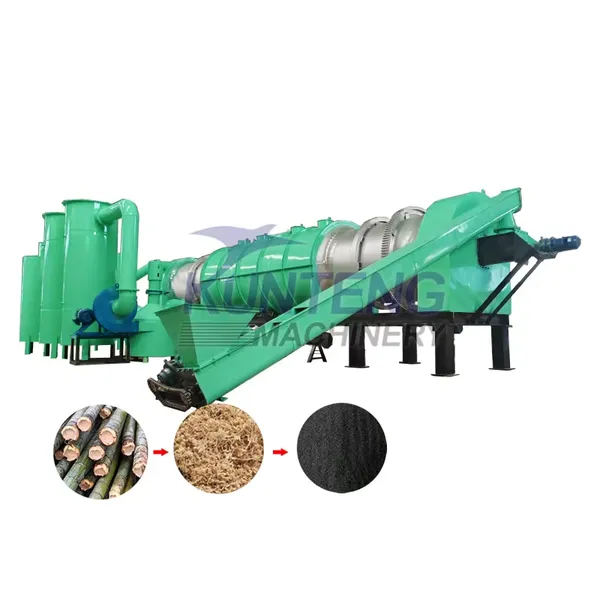
Automatic Eco-Friendly Vertical Hosting Carbonization Furnace Horizontal Sawdust Carbonizer FurnaceNegotiableMOQ: 1 Set
-
Eco-friendly Charcoal Making Machine Carbonization Furnace Continous Carbonization StoveNegotiableMOQ: 1 Set
-
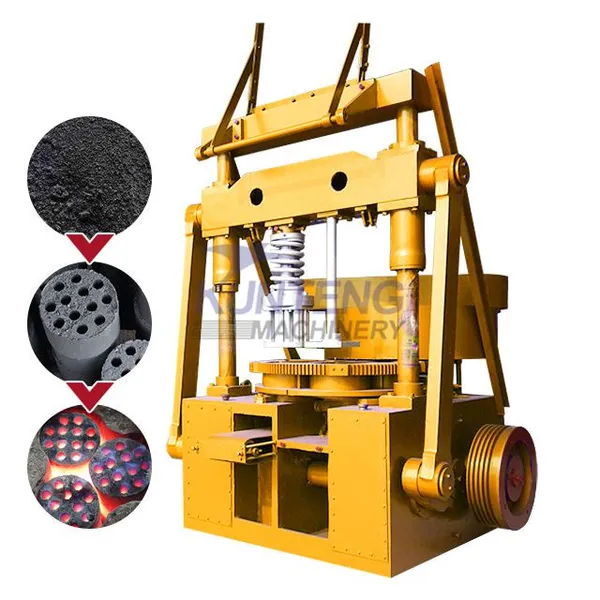
Coal Press Machine Can Customize Honeycomb Coal Forming Machine Commercial Forming MachineNegotiableMOQ: 1 Set
-
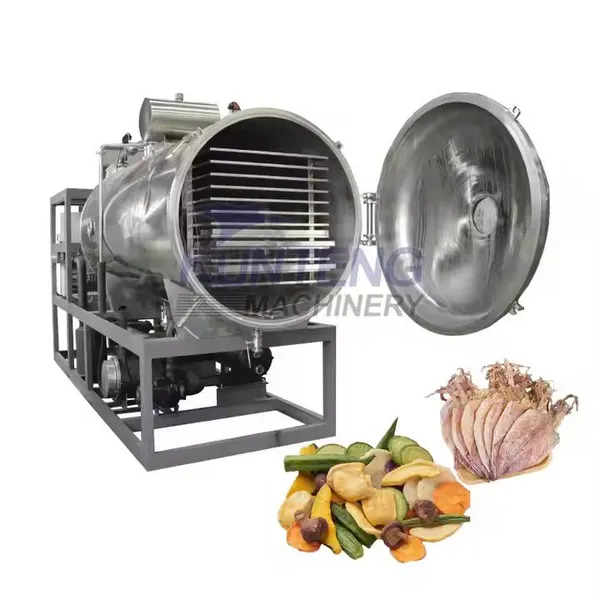
Large Commercial High Productivity Freeze Drier Dryer LyophilizerNegotiableMOQ: 1 Set
-
Monoblock Freezer Blower -18c Cold Storage Cold Room Kits CoolingNegotiableMOQ: 1 Set
-
Professional Air Flow Separation Machines Air Separation System for Waste SortingNegotiableMOQ: 1 Set
-
Smokeless Waste Incineration Machine Garbage IncineratorNegotiableMOQ: 1 Set
-
Fruit and Vegetable Drying Processing Machine Grape Raisin Drying Machine Mango Dryer MachineNegotiableMOQ: 1 Set
-
Trommel Screen Machine Construction Waste Sorting EquipmemtsNegotiableMOQ: 1 Set
-
Municipal Solid Waste Converts to RDF Machines Waste Plastic to Fuel Machine Waste Recycling PlantNegotiableMOQ: 1 Set
-
High Capacity Teak Drying Chamber Timber Formwork Dry Machine Wood Drying EquipmentNegotiableMOQ: 1 Set
-
Smart Waste Plastic Crusher and Baler Machine Recycling Machine for Plastic Waste to Make BricksNegotiableMOQ: 1 Set
-
New Design Waste Separation Machine Trommel Screen Machine for Rubbish Garbage Sorting Plant LineNegotiableMOQ: 1 Set