
 Business License
Municipal Waste Compost Sieve Machine Guide
Published on 21 October 2026
Municipal Waste Compost Sieve Machine Guide
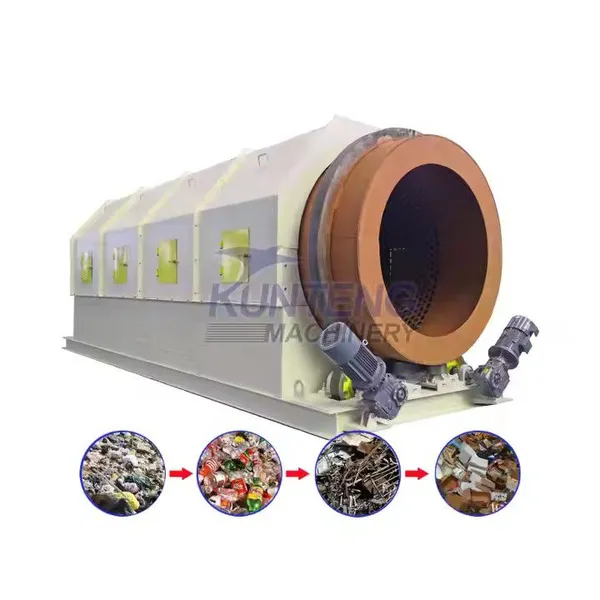
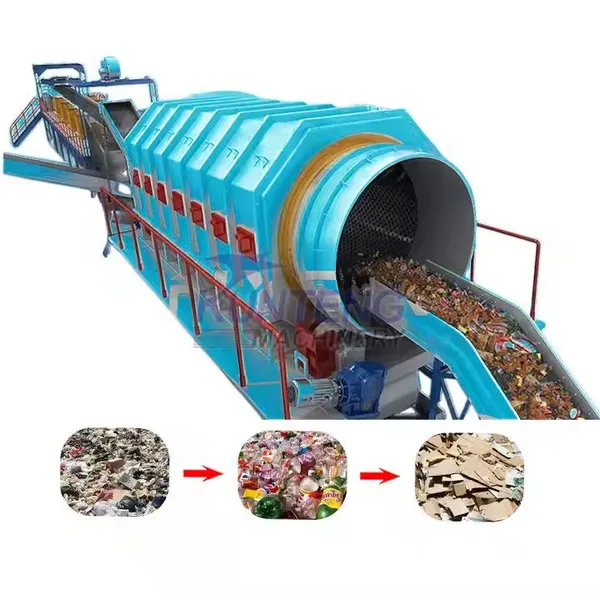
Municipal composting operations face a narrowing margin for error. Feedstock volumes are climbing, contamination limits are tightening, and the difference between a saleable soil amendment and a rejected batch often comes down to one step: screening. A Municipal Waste Compost Sieve Machine — commonly built around trommel drum technology — is the equipment category that determines whether organic fines meet spec or become a disposal liability. For buyers evaluating an Organic Soil Trommel Screen Machine for municipal feedstock, the decision is less about drum diameter and more about throughput stability, contamination control, and changeover speed under real-world variability.
The Pressure Point: More Waste, Stricter Limits
Two forces are reshaping the economics of municipal compost screening.
The first is volume. The World Bank’s What a Waste programme estimates that the world currently generates more than 2 billion tonnes of municipal solid waste each year, a figure projected to rise by roughly 70% by 2050 without significant intervention. Waste generation is growing fastest in lower-income regions — Sub-Saharan Africa’s volumes are expected to more than triple by mid-century — while high-income economies continue to produce disproportionately large absolute volumes. More MSW entering composting streams means more material that must be screened to a consistent particle size before it can be sold or land-applied.
The second force is regulatory. Under the EU fertilising product framework, compost from bio-waste must keep macroscopic impurities above 2 mm — glass, metal, and plastics — below defined thresholds. From 16 July 2026, plastics above 2 mm face a limit of 2.5 g/kg dry matter, with a reassessment scheduled for 2029. Research published in Detritus (Binner et al., BOKU University, 2026) confirms that drum screening technologies can bring plastic impurities below the EU limit value of 0.3% dry matter in the >2 mm fraction, but the same study notes that film and fibre plastics larger than the mesh size are not always fully retained by screening alone. The equipment does not just size material; it is the compliance gate.
Market behavior reflects this pressure. The global industrial trommel screen machines market was valued at USD 3.0 billion in 2024 and is forecast to reach USD 4.65 billion by 2033, growing at a 5.0% CAGR, with municipal solid waste and compost screening among the core application segments. Compost processing applications specifically are growing at rates of 7.2%–9.1%, driven by organic waste recycling expansion and facility upgrades.
How a Trommel-Based Compost Sieve Machine Responds
A municipal waste compost sieve machine built on trommel drum architecture addresses three operational realities that flat-deck or vibratory alternatives struggle to match at scale.
Continuous high-volume throughput with fewer bottlenecks. Rotating drum geometry keeps material moving through the screening zone without the reciprocating motion limits of vibratory decks. In a controlled fabrication and testing study at Tribhuvan University (Pandey et al., 2026), a trommel screening machine achieved a mean screening efficiency of 87.56% ± 4.56% on compost feedstock, with a mean throughput of 90.09 ± 6.20 kg/h on the tested prototype. At industrial scale, commercial trommel units configured for biological waste treatment report throughput capacities up to 100 m³/h on a 19 m² screening surface, depending on material characteristics. The implication for municipal operators is linear: drum uptime translates directly into tonnes of finished product per shift.
Contamination management by design, not by luck. Trommel screening does not exist in isolation. The BOKU Detritus study compared flip-flop and drum screens at 6, 8, 10, 12, and 25 mm cuts and found that while all tested technologies met the EU plastic threshold, different screen types separated plastic form-types with different efficiencies — film and fibre fractions behaved differently from rigid fragments. A compost sieve machine that allows quick drum changes and screen-size adjustment lets operators respond to feedstock shifts (e.g., a wetter batch with higher film plastic content) without shutting down the line for a full reconfiguration.
Flexibility that matches municipal feedstock variability. Municipal organic streams are not homogeneous. Yard trimmings, food waste, and mixed MSW compost each present different moisture, bulk density, and oversize profiles. Equipment that cannot change cut size or drum configuration quickly becomes a single-purpose asset. The operational advantage of a well-designed trommel lies in tool-less or low-tool changeover: the same machine can produce a fine 3/8-inch compost fraction for soil amendment and a coarser 5/8- or 3/4-inch cut for mulch or bulking agent, without a second capital purchase.
How to Reduce Plastic Contamination in Municipal Waste Compost with a Trommel Screen
The long-tail operational question most municipal buyers ask is not “what size drum?” but “how do I keep plastic out of the finished pile?” Screening is one stage in a chain, and its performance depends on what happens before and after the drum.
Map the plastic form-types in your feedstock before selecting a screen cut. Film plastics, rigid chips, and fibres behave differently in a rotating drum. If your incoming stream is dominated by bag film from yard trimmings, a single trommel pass at a larger cut may push more film into the oversize stream; a tighter cut may increase fines capture but risk blinding in wet conditions. The BOKU study found that film and fibre materials larger than the mesh size were not entirely retained, meaning cut size alone is not a guarantee of complete separation. Start with a feedstock audit: what plastic forms are present, and at what size ranges?
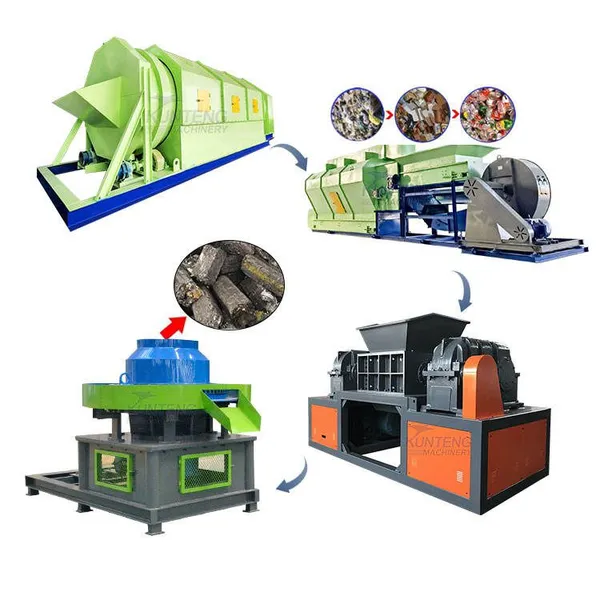
2. Stage screening rather than relying on one pass. A single trommel pass removes a meaningful fraction of oversize contaminants, but multi-stage screening — coarse drum followed by a finer drum or a secondary separation step — gives operators more control over the final impurity profile. Research comparing single-pass and double-pass trommel screening on MSW compost found that two passes through an 18.75 mm trommel reduced foreign matter to a lower level than a single pass, though the relationship depends on the screen cut and feedstock. The practical takeaway: design the screening circuit around the target specification, not around a single machine’s nominal capability.
3. Match drum speed and feed rate to moisture, not just tonnage. Compost that is too wet blinds the screen; compost that is too dry generates dust and static. Feed rate and drum rotational speed interact with moisture content to determine both productivity and separation efficiency. A 2014 study in Misr Journal of Agricultural Engineering found that increasing compost feed rate under 11 mm and 13 mm screen openings raised both machine productivity and separating efficiency up to 10 Mg/h, but the optimum is feedstock-specific. For municipal operators, the discipline is to treat drum speed and feed rate as adjustable variables, not fixed settings.
4. Integrate air classification or post-screen polishing where film plastic persists. Trommel screening is highly effective at size-based separation, but light film plastics can behave unpredictably in a rotating drum. Where the feedstock is known to carry high film content — for example, packaged food waste or yard waste collected in plastic bags — pairing the trommel with air classification or a polishing screen at the back end improves the final impurity profile. WRAP guidance notes that once material is shredded and composted, trommel or star screening can be combined with air-classification if the compost is suitably dry and friable. The trommel does the bulk sizing; the air step targets the light fraction the drum cannot reliably retain.
Real-World Evidence: Flexibility and Uptime as the Buying Criteria
The clearest operational evidence for trommel-based compost screening comes from facilities that have moved beyond single-machine thinking.
Hansen’s Tree Service & Environmental Resources, a Missouri-based organic recycling operation running 75 trucks and processing a constant stream of logs, brush, and stumps, expanded its screening capacity with three Doppstadt SM Trommel Screens. The company’s maintenance and fleet director, Travis Amrine, cited two factors in the purchase decision: maintenance access and changeover speed. “The build of the Doppstadt Trommel makes it very accessible for maintenance and repairs,” Amrine said, noting that easier access translates into faster service and less downtime. On the flexibility side, Hansen’s runs a 3/8-inch drum for fine compost destined for soil amendment applications and switches to 5/8-inch or 3/4-inch drums for mulch products — the same machines serving different product lines without a second screening asset. Amrine described the SM Trommel as “the most efficient Trommel Screen we have run”.
For municipal buyers, the lesson is not the brand name but the procurement logic: the machine that wins is the one that stays running and can be reconfigured when the feedstock or product specification changes. A compost sieve machine that requires a full teardown to change the drum, or that blocks access to wear parts, carries a hidden cost that does not appear on the quotation.
FAQ
What is the typical lead time for a municipal waste compost sieve machine? Lead time depends on configuration: mobile/portable trommel units and stationary models with standard drum sizes generally ship faster than multi-drum or custom-configured systems. Buyers should confirm whether the quoted lead time includes drum changeover tooling, spare screens, and commissioning support. For project planning, request a written production schedule with milestones for fabrication, factory testing, and shipment.
Can the same machine process both municipal solid waste compost and organic soil/topsoil blends? Yes, within the limits of the drum and screen configuration. Trommel screens are applied across MSW composting, organic waste, and topsoil/compost blending, but the screen cut and drum speed must be adjusted for each material. A machine configured for fine compost (e.g., 3/8-inch cut) will need a different drum or screen panel for coarser topsoil blending. Buyers should specify the full range of intended feedstocks during the inquiry so the manufacturer can recommend the drum set and drive configuration.
What customization is available for a Municipal Waste Compost Sieve Machine? Common customization points include drum diameter and length, screen aperture sizes, drive type (diesel-hydraulic or electric/dual-power), mobile versus stationary chassis, and feed/discharge conveyor configurations. For municipal projects with site-specific layout constraints, manufacturers can typically modify hopper height, discharge direction, and control system integration. The practical starting point is a feedstock and site-layout brief rather than a generic model number.
Next Step for Municipal Screening Projects
The screening step sits at the point where waste management cost meets product revenue. A trommel-based compost sieve machine does not solve contamination or throughput problems by itself — but the right configuration, matched to the actual plastic form-types, moisture profile, and product specification of a municipal stream, turns screening from a bottleneck into a controllable process variable.
If your project involves municipal organic waste, mixed MSW compost, or organic soil production, the productive next step is a feedstock-specific screening assessment: share the intended input materials, target output specification, and site throughput requirement, and ask for a drum configuration recommendation with a factory acceptance test protocol. That conversation is where the capital decision becomes an operational plan.
Recently Posted
-
Manual Sorting Platform for MSW Recycling Lines
October 21, 2026Published on 21 October 2026Incoming contamination at material recovery facilities often hovers around 15%, while outgoing bale sp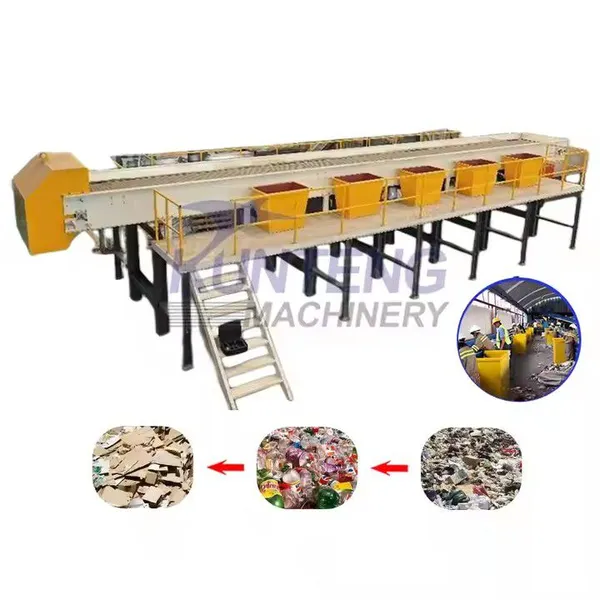 Read More
-
Mobile Industrial Paper Shredder: On-Site C&D Waste Guide
October 20, 2026Published on October 20, 2026If your construction or demolition operation still hauls raw, bulky debris to a third-party processor Read More
-
Coconut Fiber Defibering Extracting Machine: Boost Coir Production
October 19, 2026Published on Oct 19, 2026If you run a coir processing plant, you know manual fiber extraction creates low yield, high labor cost a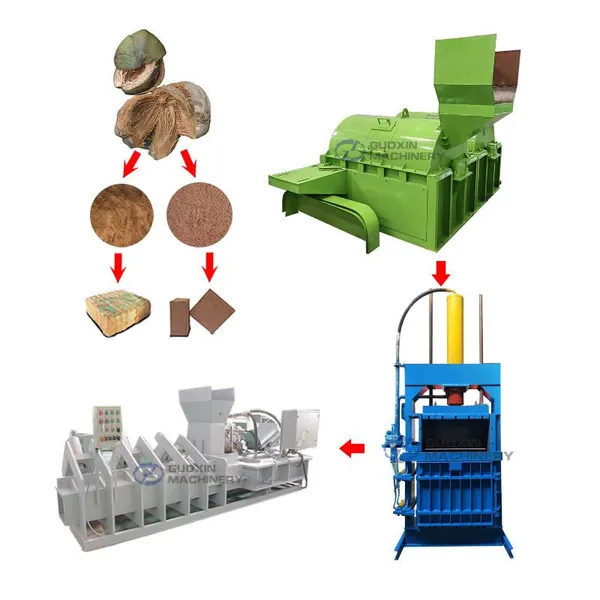 Read More
-
Continuous Automatic Tray Freeze Dryer: Scale Fruit & Veg Lyophilization
October 19, 2026Published on October 19, 2026If you run a fruit and vegetable processing plant aiming to scale freeze-dried snack production, a co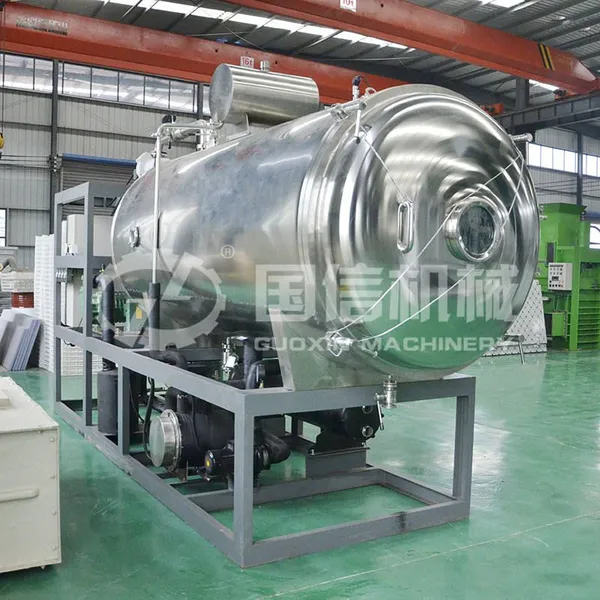 Read More

Contact Us
Recommended Products
-
 Continuous Heavy Metals Shredder Damaged Cars Crusher HMS Heavy Melting Steel Scrap Wire MS Iron ShredderNegotiableMOQ: 1 Set
-
Large Dustbin for Sorting Table With Scrapshoot Hole Waste Segregation Machine Sorting LineNegotiableMOQ: 1 Set
-
High Productivity Iron Ore Powder Ball Press Machine Mineral Soil Silicon Powder Briquetting MachineNegotiableMOQ: 1 Set
-
Eco-friendly Coconut Shell Charcoal Briquette Making Machine Charcoal Press Machine Bbq Charcoal Production LineNegotiableMOQ: 1 Set
-
Full Automatic Coconut Charcoal Hydraulic Press Machines Sawdust Charcoal Briquette Machines Biomass Charcoal Briquette MachineNegotiableMOQ: 1 Set
-
Corn Stalk Briquette Making Machine Chicken Manure Biomass Briquetting Extruder Press MachineNegotiableMOQ: 1 Set
-
Small Scale Charcoal Briquette Making Machine Compressed Coal Industry Machines Automatic Extruder Production LineNegotiableMOQ: 1 Set
-
Automatic Eco-Friendly Vertical Hosting Carbonization Furnace Horizontal Sawdust Carbonizer FurnaceNegotiableMOQ: 1 Set
-
Eco-friendly Charcoal Making Machine Carbonization Furnace Continous Carbonization StoveNegotiableMOQ: 1 Set
-
Coal Press Machine Can Customize Honeycomb Coal Forming Machine Commercial Forming MachineNegotiableMOQ: 1 Set
-
Large Commercial High Productivity Freeze Drier Dryer LyophilizerNegotiableMOQ: 1 Set
-
Monoblock Freezer Blower -18c Cold Storage Cold Room Kits CoolingNegotiableMOQ: 1 Set
-
Professional Air Flow Separation Machines Air Separation System for Waste SortingNegotiableMOQ: 1 Set
-
Smokeless Waste Incineration Machine Garbage IncineratorNegotiableMOQ: 1 Set
-
Fruit and Vegetable Drying Processing Machine Grape Raisin Drying Machine Mango Dryer MachineNegotiableMOQ: 1 Set
-
Trommel Screen Machine Construction Waste Sorting EquipmemtsNegotiableMOQ: 1 Set
-
Municipal Solid Waste Converts to RDF Machines Waste Plastic to Fuel Machine Waste Recycling PlantNegotiableMOQ: 1 Set
-
High Capacity Teak Drying Chamber Timber Formwork Dry Machine Wood Drying EquipmentNegotiableMOQ: 1 Set
-
Smart Waste Plastic Crusher and Baler Machine Recycling Machine for Plastic Waste to Make BricksNegotiableMOQ: 1 Set
-
New Design Waste Separation Machine Trommel Screen Machine for Rubbish Garbage Sorting Plant LineNegotiableMOQ: 1 Set